

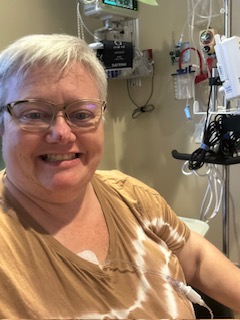
Andrea D’Amato and her husband left Massachusetts in 2019 and nestled in the small, scenic community of Pembroke, Maine, a town with fewer than 800 residents. They were seeking a change of scenery as they planned for their retirement years and aimed to provide a lifestyle that included animals and some farming for their adult autistic son, who lives with them.
It was in 2021 that Andrea started to feel some symptoms she described as “weird”, thinking maybe it was signs of menopause. During that time, any non-COVID medical issues were being pushed off, so Andrea wasn’t seen until a few months later when she was forced to go to the ER in extreme pain. What initially seemed to be bloating turned out to be the 10 liters of fluid doctors found in her abdomen. It wasn’t long before she was diagnosed with ovarian cancer.
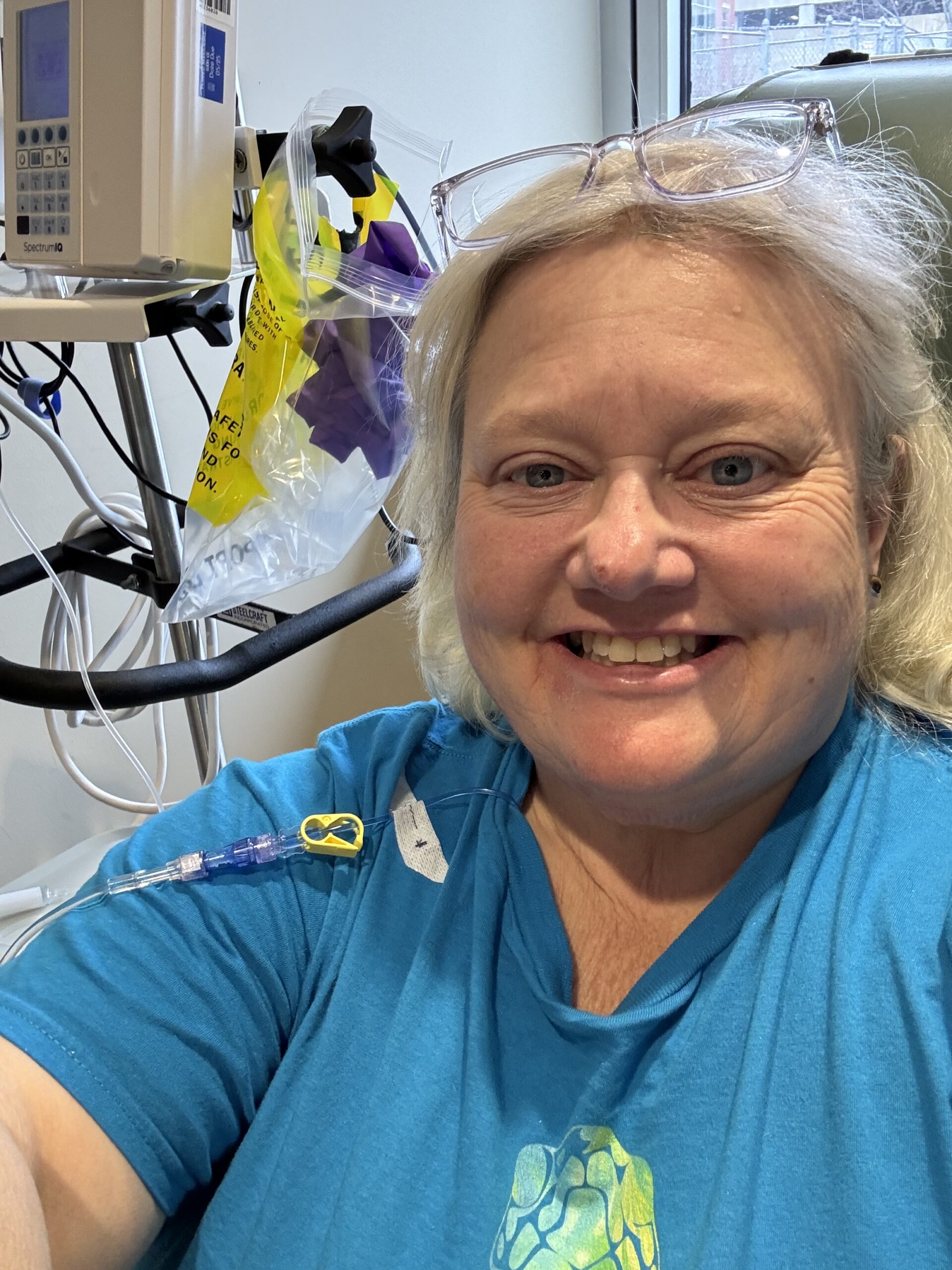 And there began her challenging journey of not just getting treatment, but of getting to treatment. First, to even travel to the ER, the nearest hospital was 45 minutes away. The doctors at that facility referred Andrea to an auxiliary cancer center in Bangor to start her treatments, which were two hours away. For her initial surgery, she needed to go to a facility in Portland, now four hours away from home.
About a year and a half into treatments in Bangor, Andrea started to have some complications, and the Bangor facility was not equipped for the next steps in her journey. More travel was on the horizon. It was impossible to find a rhythm and any consistency in her recovery.
“I had to tell my story over and over and over again,” Andrea remembered. “Every time I met somebody new and a different hospital [had a different] computer system, nothing tracked, so…you couldn’t forget that you had cancer. The story had to be repeated over and over every time you met someone who was a nurse or a specialist. And that was probably one of the most upsetting and frustrating things.”
Andrea continued making calls, advocating for herself, and trying to find the right facility for her unique condition. She eventually found the specialists she needed at a Mass General facility in Dover, New Hampshire, a five-hour drive from her home in Pembroke.
Not only was the travel taking a significant amount of time, but it was also consuming all the family’s resources. Andrea was unable to work and, at times, had no income coming in. Her husband found a job, but it paid close to the minimum wage. At some point, they got behind. It was a scary situation. Thankfully, the Joe Andruzzi Foundation (JAF) helped the family pay for their oil delivery, providing them with a bit of a buffer. But it could’ve been a very different story.
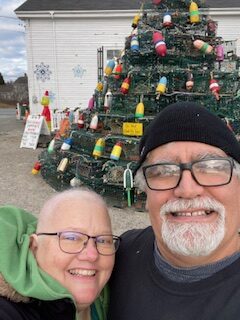 “I remember getting the phone call. I was about to head out for another week of treatment, and I didn’t know if the oil was going to run out. Just to be able to leave and know that I didn’t have that worry…I don’t know what the story would have looked like because every time you go for treatment, you think Okay, can I do it again this time? Is this what I should be doing? Is it worth it? Is it the right thing to be doing, and doesn’t it take much to tip you over, especially when you’re traveling so far? Honestly, I don’t know what would have happened. I might have just said, ‘Well, I might just have to stay home this time and not take treatment and just get through this because you only have so much, your resources only go so far.'”
Andrea has done her best to find a routine as she gets treatments every 21 days. The good news is that she’s healthy enough to drive herself the five hours each way to New Hampshire, which is usually a multiple-day trip away from home. She must rely on friends to stay with her, or sometimes has to get a hotel while her husband stays back to care for their son. She’s found a rhythm through the challenge, but knows her situation could change at any minute, leaving her without the energy to complete this journey herself.
“I don’t know what’s going to happen when I can’t drive myself to treatment. Because there’s nothing that’s going to get me from little Pembroke, Maine, to Mass General. There’s no bus; if I take a plane, it’s a two-hour ride to Bangor. There might be some volunteer services closer to me. But then, when I get down there and I have two days of treatment, I must rely on an Uber because I won’t have my car, which complicates everything.”
It’s a daunting proposition that highlights the transportation challenges patients face when they aren’t fortunate enough to live right down the road from the world-class facilities in New England.
But for now, Andrea keeps driving down the road for her life-saving treatment, always trying to look for the positives. Thankful that she’s in good enough health to make the journey for herself as she traverses the challenging roads of a cancer diagnosis.
The Joe Andruzzi Foundation (JAF) is proud to partner with our friends at the Maine Cancer Foundation (MCF), who also understand and support the needs of cancer patients when it comes to transportation, and that sometimes the biggest challenge is ‘just getting there.’ MCF has joined the Foundation, which is helping to provide resources for travel expenses. Maine’s geographic landscape and sometimes remote treatment facilities can present as hurdles for accessing even the most basic care. That is why JAF’s Treatment Transportation Program has become an incredibly utilized program by social workers, as it allows them to quickly and at no cost to the patient, transport patients to their treatment centers via Lyft and other car services. Funding currently available will enable JAF to operate only in Massachusetts, Rhode Island, and Maine, but we hope to expand this service.
If you would like to learn more about JAF’s Treatment Transportation Program or consider becoming a corporate sponsor to help remove these fundamental barriers to treatment and expand access, please get in touch with Barbara Foley at barbara@joeandruzzifoundation.org.