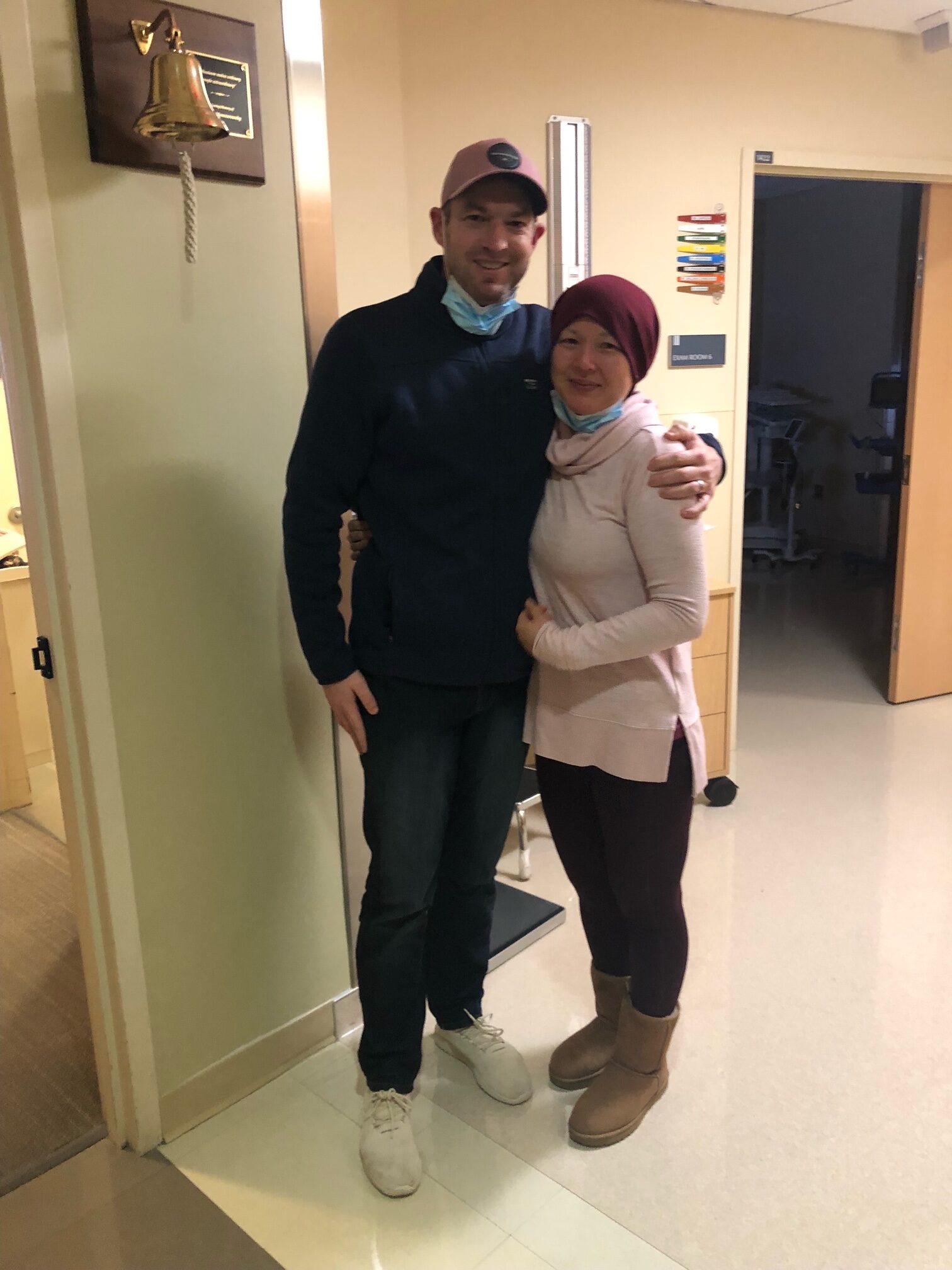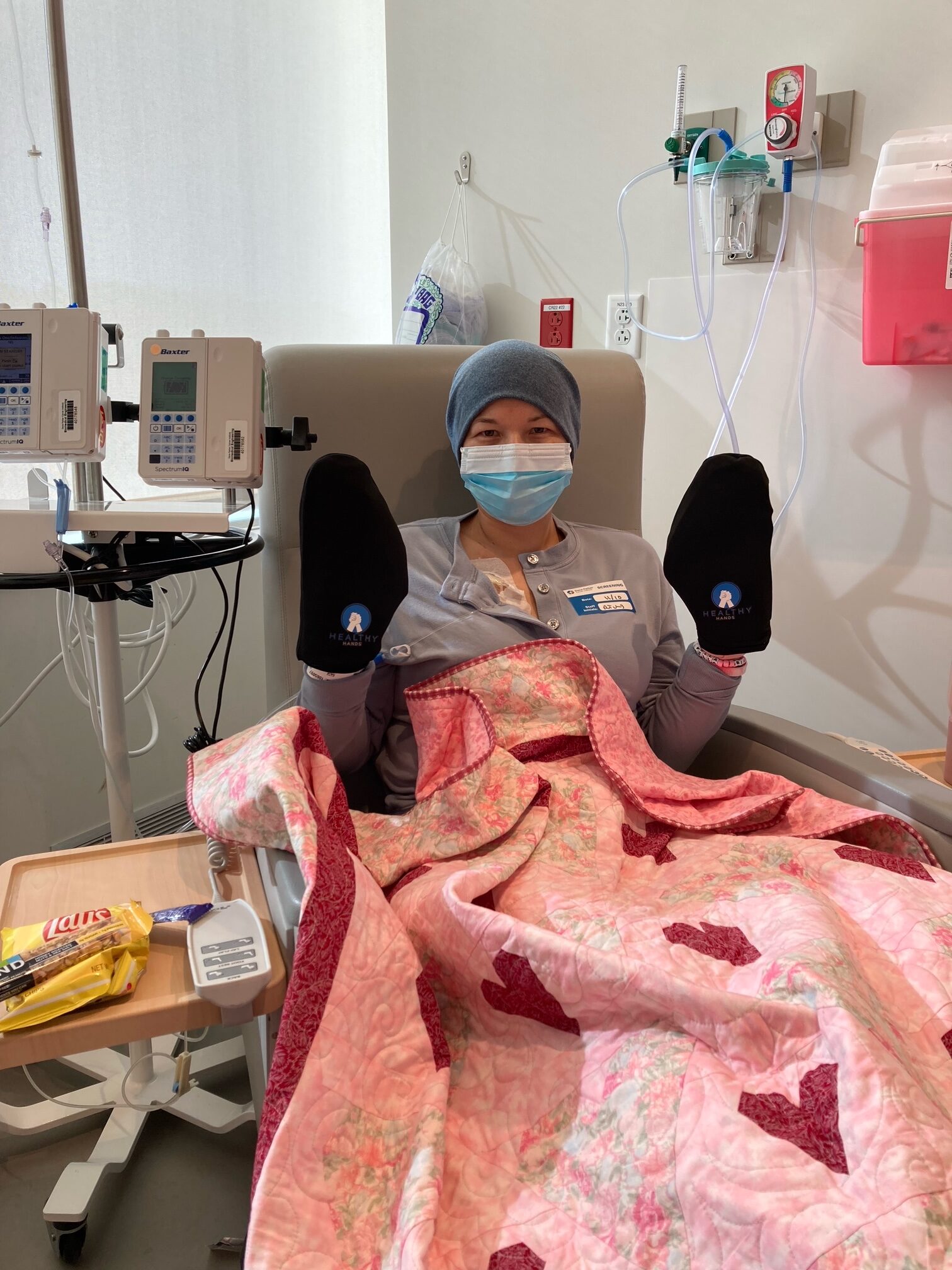

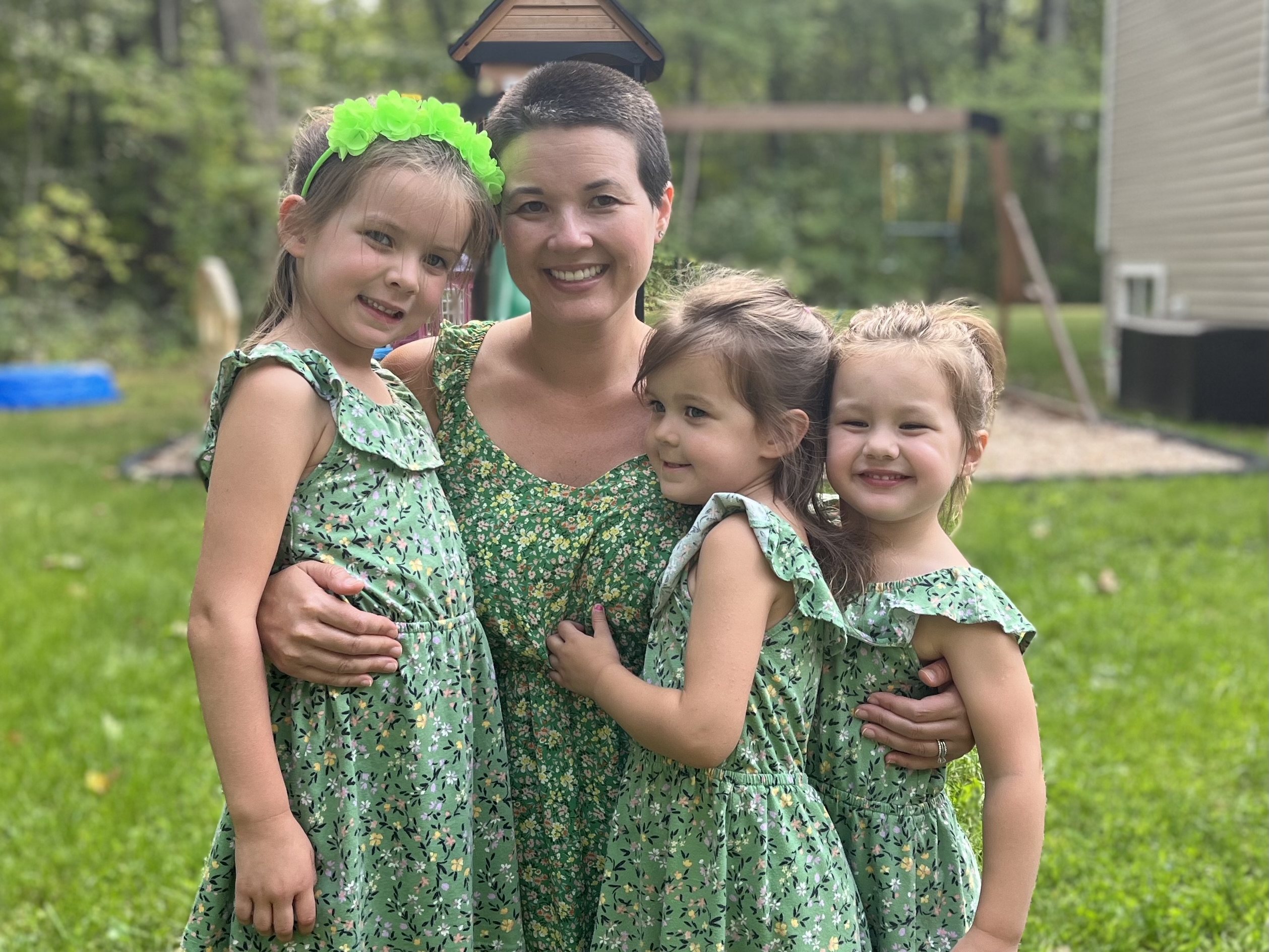
Renee Malloy’s story is a reminder that a cancer diagnosis can strike anyone at any time, and at any age. It also highlights the struggles that are unique to young adults living with cancer.
“I feel like it’s important to share my story because I think the majority of people think of getting cancer at an older age,” Renee said. “And unfortunately, there’s a lot more younger individuals who are getting a diagnosis and going through extensive treatment with a huge disruption to their life.”
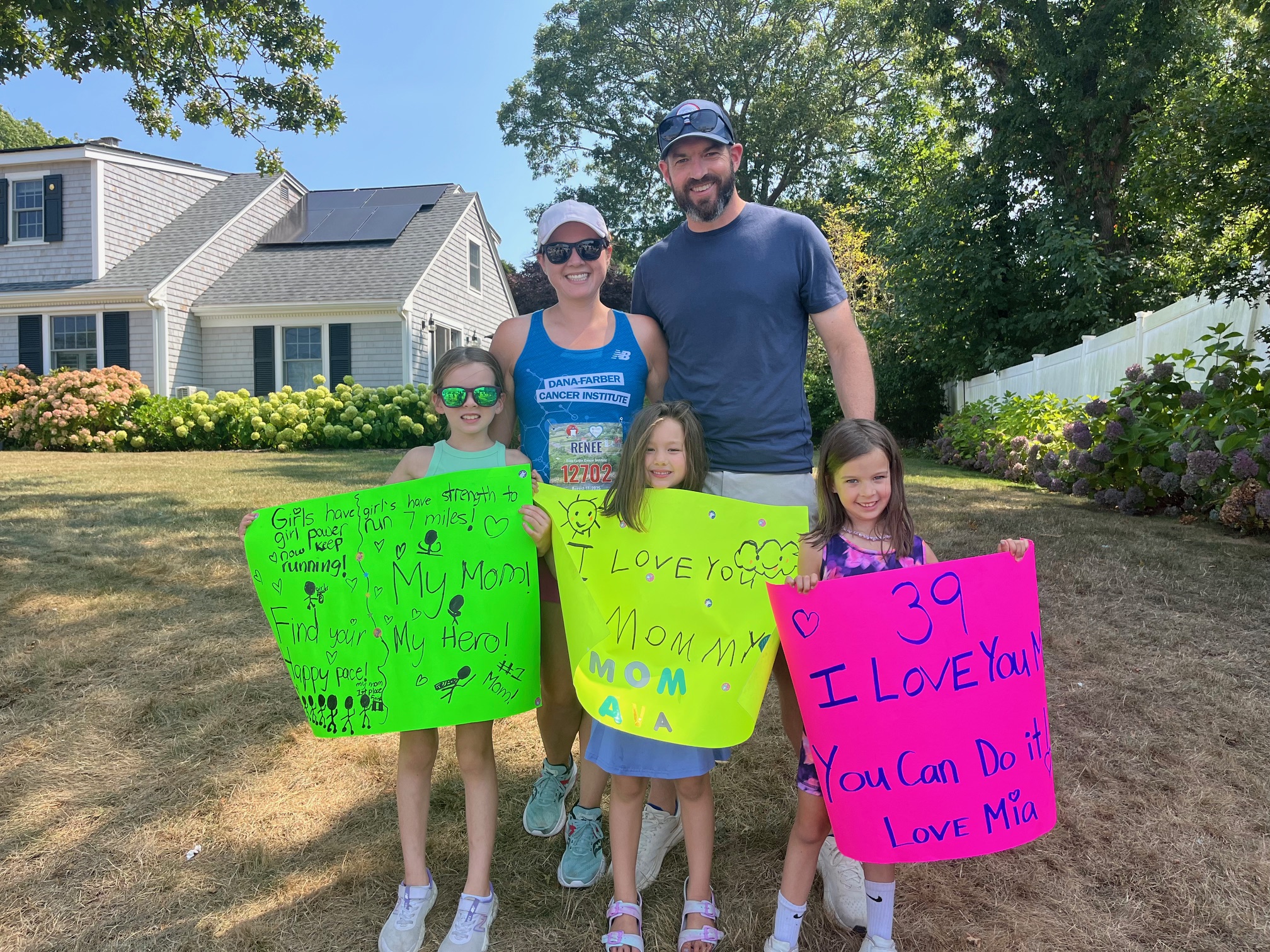 Renee is a speech pathologist, living with her husband and her three kids – ages five and twins, age three at the time of her diagnosis. She had felt fine, though she experienced quite a bit of stress in her professional life. She was the only speech pathologist at her facility, working three 10 to 12-hour days a week. But nothing seemed out of the ordinary until she felt a lump on her breast in the shower one day. Being in the medical field, she knew she should get it checked out.
Because she was only 35, she had not even had a mammogram. Doctors were able to see her; eventually, they recommended a biopsy, which revealed invasive ductal carcinoma. Due to Renee’s age, her medical team also did genetic testing, which revealed she was a carrier of the BRCA gene.
Renee prepared for surgery, thinking she would be out of work for about six weeks. But during prep for surgery, she found another lump, this time in her armpit. The pathology came back and revealed the cancer had spread, and she had two out of six lymph nodes test positive for cancer cells. What was planned as a short-term recovery would now be much longer.
While initially, Renee and her family were able to use PFML (paid family medical leave), the length of the treatment and side effects made it clear that work would not be an option for a long period of time. Besides being unable to lift patients and push wheelchairs at her job while being medically immunocompromised, the effects of chemotherapy and “chemo brain” would make her quite literally unable to function as a speech therapist. It did not take long to max out her 20 weeks on PFML, and it was hard not to be concerned.
“I was stressed out about everything. The holidays were coming up; we have three kids. They are in a preschool program that we paid for. They’re in all these activities. I was bringing in a substantial income.”
It was during that time that a social worker at Dana Farber told them about the Joe Andruzzi Foundation (JAF). JAF was able to help Renee with a financial assistance grant towards a mortgage payment and an additional grant for groceries. Renee was so appreciative of the help and the turnaround time in a key moment along the journey.
“At the time, I was just kind of really feeling stuck and guilty. Not being able to contribute and seeing my husband feeling the stress of being the sole provider for a family. I was trying to keep our kids’ lives as normal and routine as possible without any disruptions. I felt that getting the response that we were going to be awarded the assistance, and then how quickly things came through, was pretty fantastic.”
Renee and her family got a brief break for the holidays, then radiation started. She was forced to undergo additional surgeries because of the BRCA mutation and additional follow-up treatments. There were so many medications with complicated side effects, including fatigue, forced menopause, and brain fog. It made finding words while speaking difficult, an especially cruel side effect for someone who spends their work life helping others with their language skills. It was almost 18 months before Renee felt strong enough to return to work. And that is time you never get back. She summed it all up beautifully as she looked back on that time.
“It is the mental toll and loss of yourself that you’re going through…You always had to put on this brave face and have a smile and look okay and look happy, so people would know you’re okay when deep down, it’s a constant processing and grieving of yourself and grieving of the time that you’ve lost. Even now, three years later, I’m still grieving my past self and everything I’ve gone through. Having three young kids, I feel like I’ve missed out a lot on the silly fun things that were supposed to be happening. Just constantly worrying about my health, what do I have to do to keep healthy and keep the cancer from returning? Trying not to feel guilty that I’m putting myself first when I have a family and a husband, but needing to be a little bit selfish and prioritize myself so that I can be healthy and be here for my kids. I think the emotional component to it all is something that you really don’t understand unless you’ve walked in those shoes yourself.”
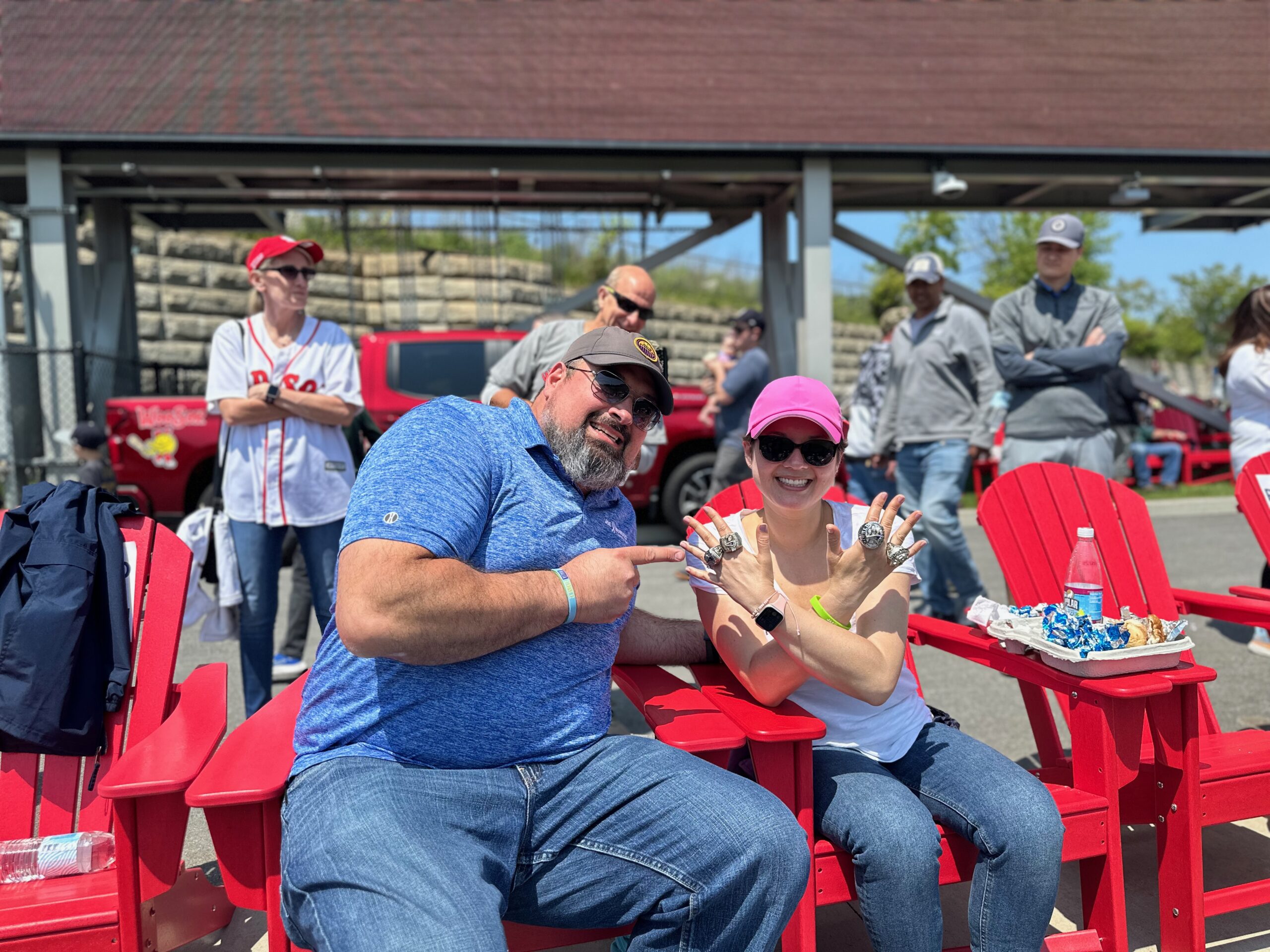 It’s been an incredibly long journey, but Renee and her family are back on their feet. They had the pleasure of attending some JAF events – taking her family to a WooSox event last spring and meeting Joe. Another highlight was taking her kids to a Disney on Ice event. To have that sense of community.
“Being able to relate to [Joe], who went through his own journey and is now just giving back to all these patients and families around New England, is pretty amazing. And it’s something special that I didn’t expect after going through my own cancer journey. It’s one thing to get the funding and the financial assistance, but then to have these moments and memories with your family. It kind of helps you escape from the sadness and the hardship of it all.”